

 Image 1 of 1
What it is:
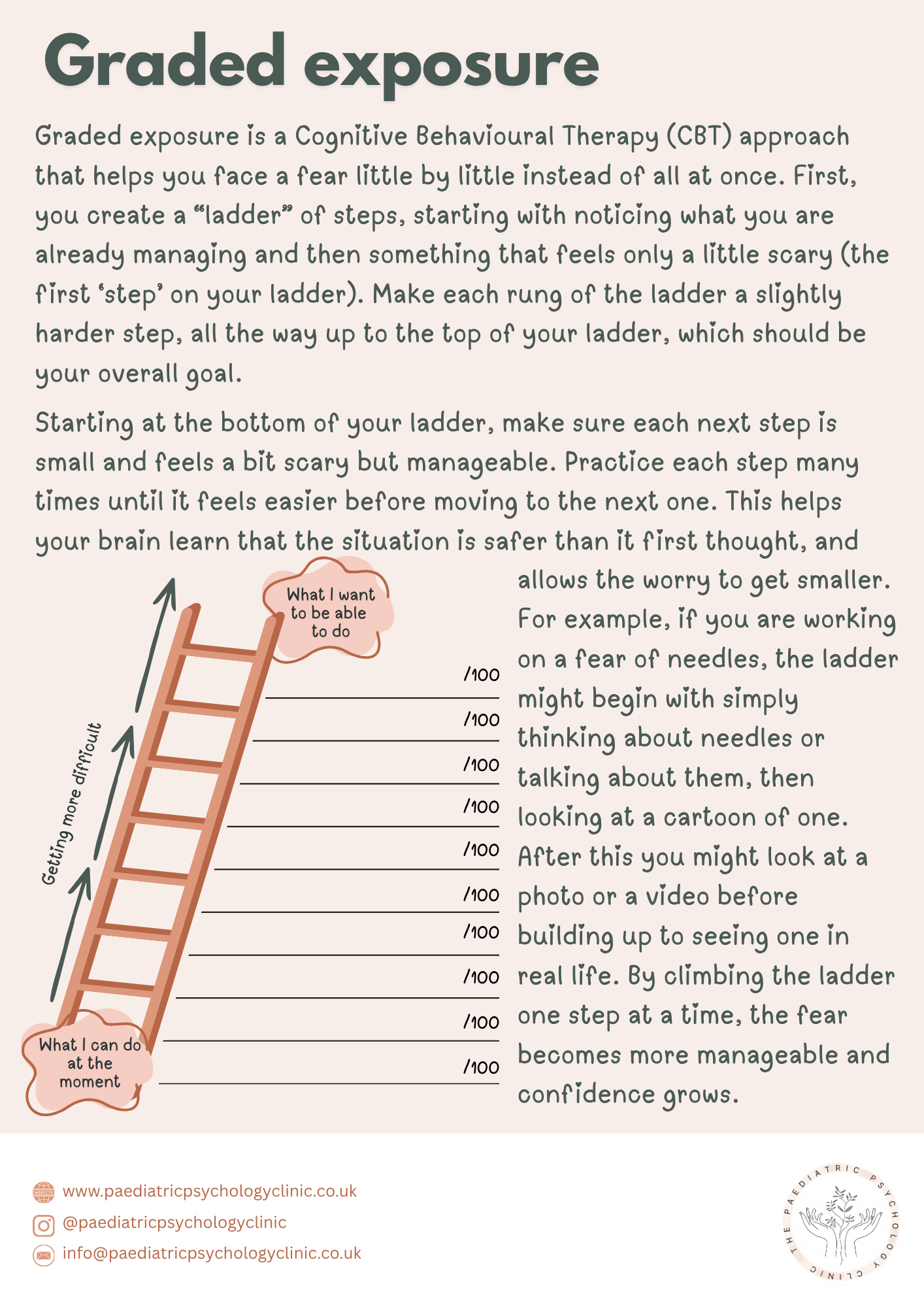
Designed and written by an experienced clinical psychologist, this resource offers a structured, evidence-based approach to help reduce fear, avoidance and distress related to specific situations, procedures, sensations or medical treatments. This can be really helpful for both parents, children and young people. The approach requires the person to gradually and safely expose themselves to the feared thing by following a series of small, manageable steps supported with coping skills to build confidence.
Who it helps: People who experience high anxiety, leading to avoidance and distress for example when encountering:
Medical procedures (needles, hospital visits, scans)
Specific situations (doctor appointments, dental visits)
Fear-based behaviors that interfere with daily life, schooling or treatment adherence (e.g. swallowing, separation)
Graded exposure is suitable when avoidance or fear significantly interferes with wellbeing, daily life or accessing healthcare. It may be combined with other approaches (e.g., relaxation training, cognitive therapy, pain management). Taking small, gradual steps can help the fear to become more manageable and allows confidence and age appropriate independence to grow.
What it is:
Designed and written by an experienced clinical psychologist, this resource offers a structured, evidence-based approach to help reduce fear, avoidance and distress related to specific situations, procedures, sensations or medical treatments. This can be really helpful for both parents, children and young people. The approach requires the person to gradually and safely expose themselves to the feared thing by following a series of small, manageable steps supported with coping skills to build confidence.
Who it helps: People who experience high anxiety, leading to avoidance and distress for example when encountering:
Medical procedures (needles, hospital visits, scans)
Specific situations (doctor appointments, dental visits)
Fear-based behaviors that interfere with daily life, schooling or treatment adherence (e.g. swallowing, separation)
Graded exposure is suitable when avoidance or fear significantly interferes with wellbeing, daily life or accessing healthcare. It may be combined with other approaches (e.g., relaxation training, cognitive therapy, pain management). Taking small, gradual steps can help the fear to become more manageable and allows confidence and age appropriate independence to grow.